Skip to content
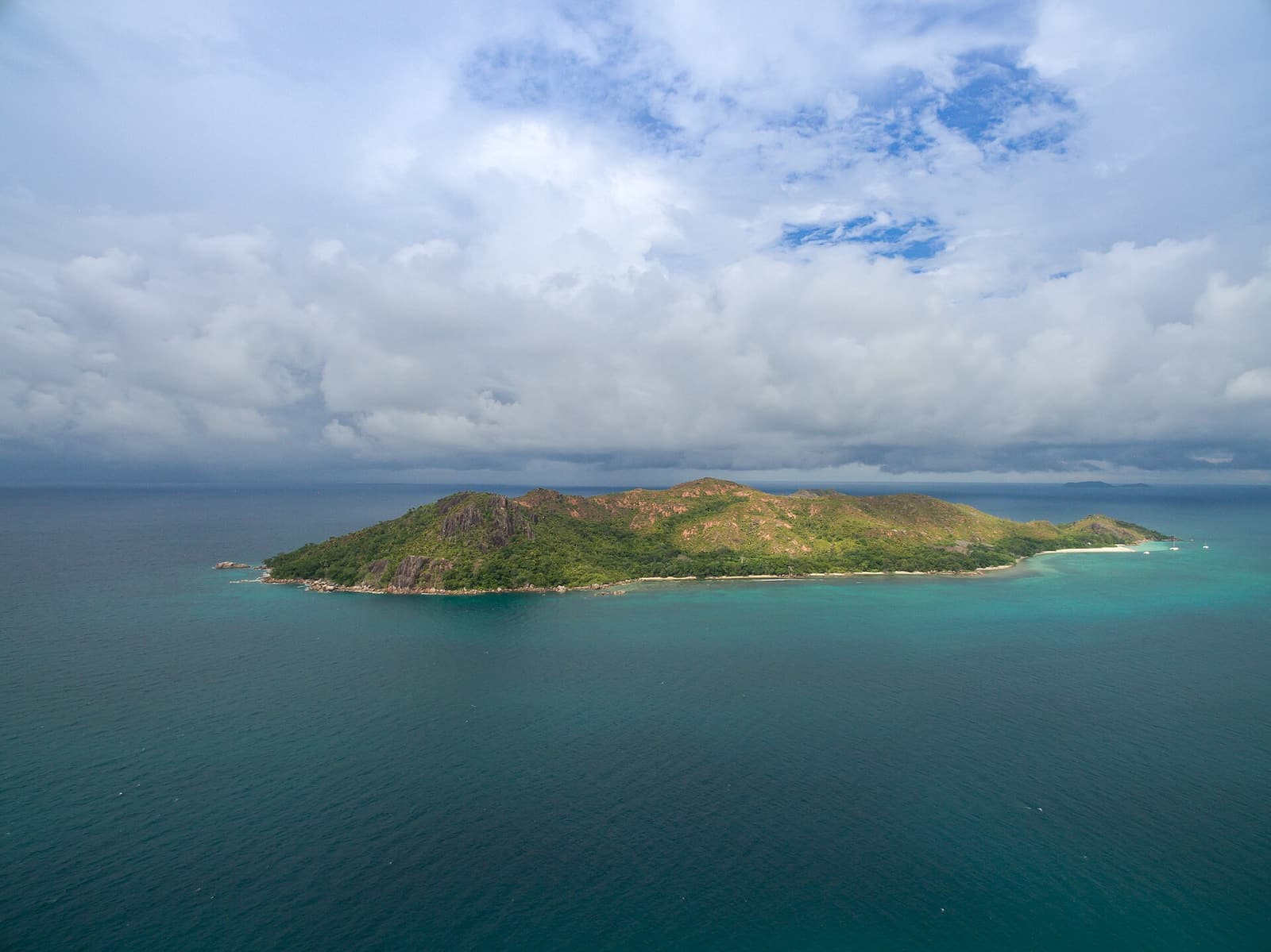
Aerial view of Curieuse Island surrounded by the blue Indian Ocean

Things to See on Curieuse and Around

A tortoise station, a mangrove boardwalk, a leper colony’s past — and the islands that go with them.

The sights fall into three groups. On Curieuse itself are the ranger station and tortoises of Baie Laraie, the mangrove boardwalk and trail across the island, and the Doctor’s House at Anse José. In the water around it are the islets and neighbouring islands visited on the same boat trips: St Pierre and Cousin. And on Praslin and La Digue, where you will stay, are the coco de mer forest of the Vallée de Mai and some of the finest beaches in the Indian Ocean.

Each has its own detailed guide below, with what to see, how to get there, practical tips and the trips that go there.
Curieuse Island

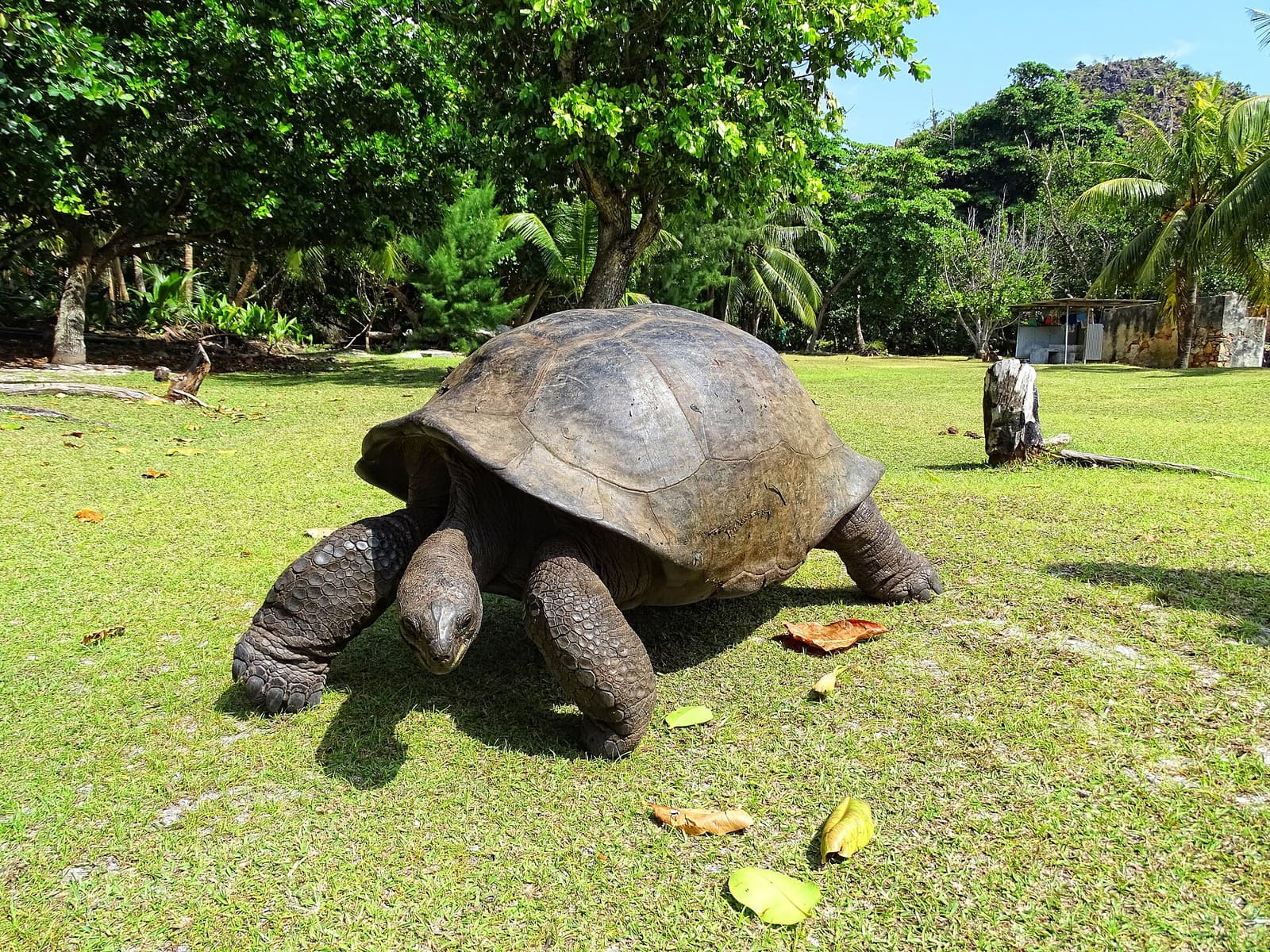
An Aldabra giant tortoise walking on the lawn near the ranger station at Baie Laraie, Curieuse Curieuse Island

Baie Laraie & the Giant Tortoises

Where the boats land — and the tortoises wander the lawn

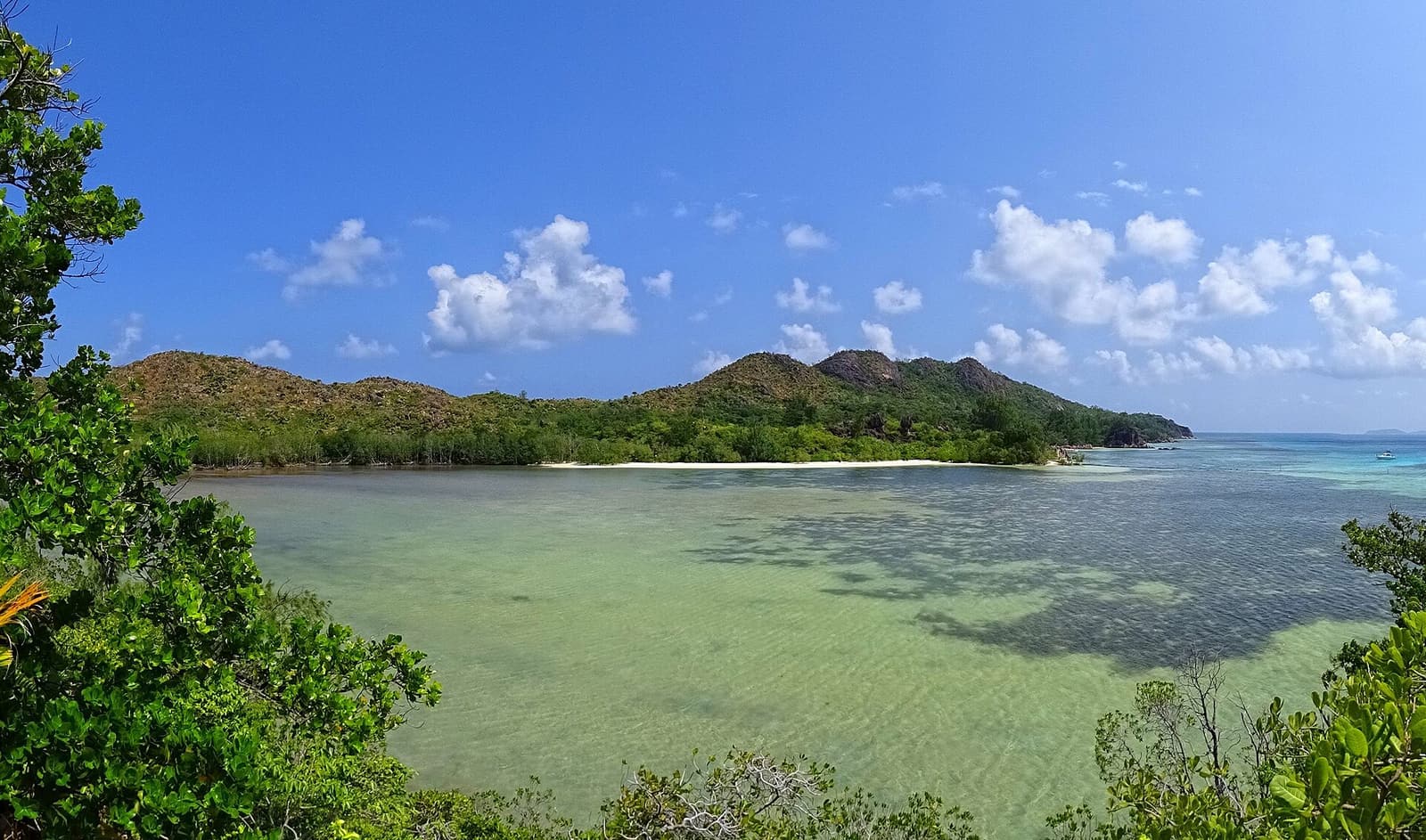
The wide bay on the south side of Curieuse, facing Praslin, is where almost every visit begins. Beside the beach stands the ranger station of the marine national park, and around it, grazing on the grass or dozing in the shade, are some of the island’s Aldabra giant tortoises. More than 300 live on Curieuse, descendants of animals brought from Aldabra between 1978 and 1982; the youngest are reared in pens by the station until they are big enough to fend for themselves.

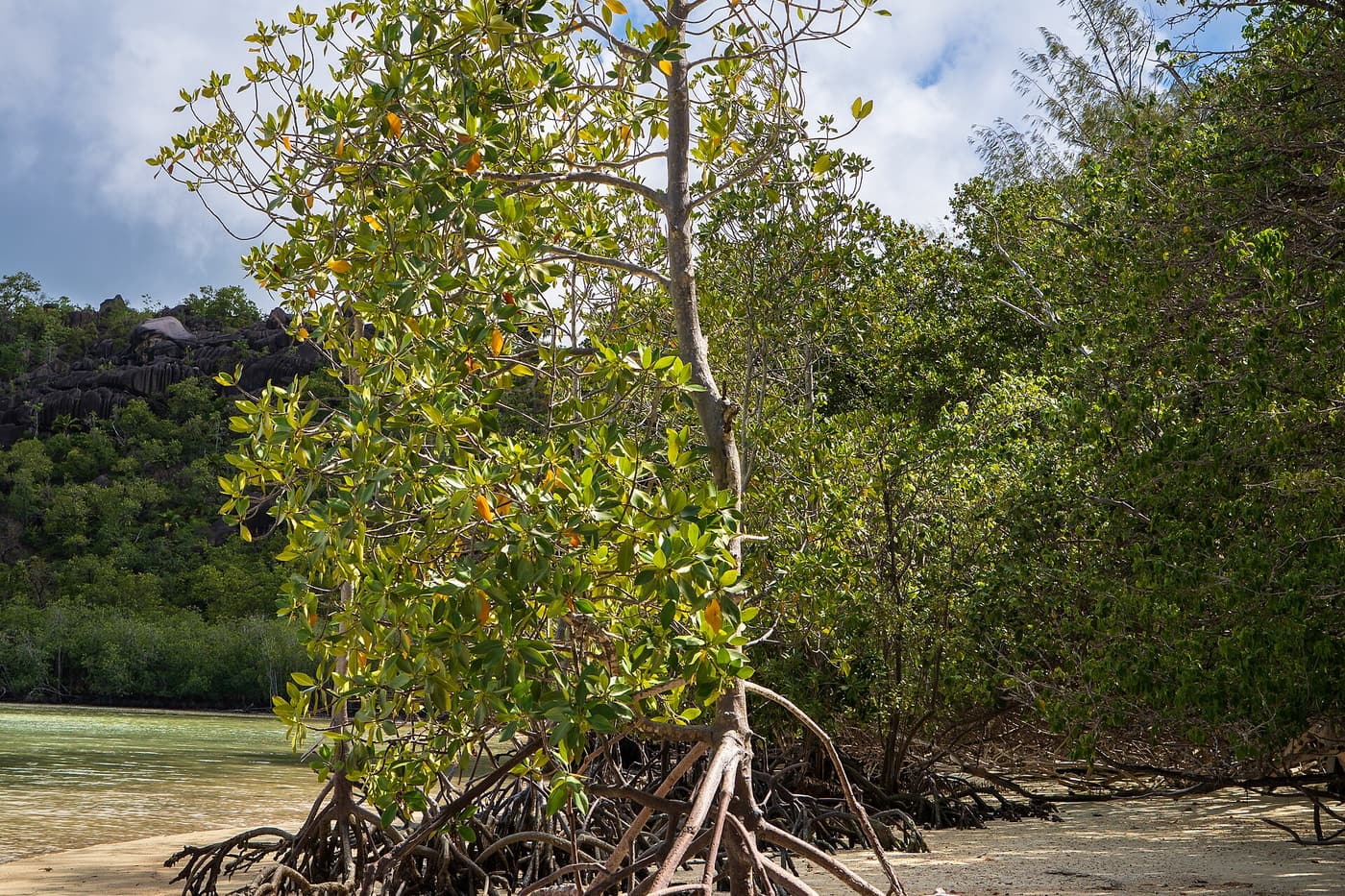
A mangrove tree with arching stilt roots at the edge of the shallow bay on Curieuse Curieuse Island

Mangrove Boardwalk & Trail to Anse José

A raised walkway through the mangroves, then over the red hills

From the ranger station a trail sets off around the head of Baie Laraie, where a raised boardwalk carries you over one of the finest mangrove forests in the granitic Seychelles. Crabs scuttle among the stilt roots below; herons fish in the channels. The path then climbs gently over a saddle of red earth, past young coco de mer palms, and drops down to Anse José on the other side — usually a walk of well under an hour.

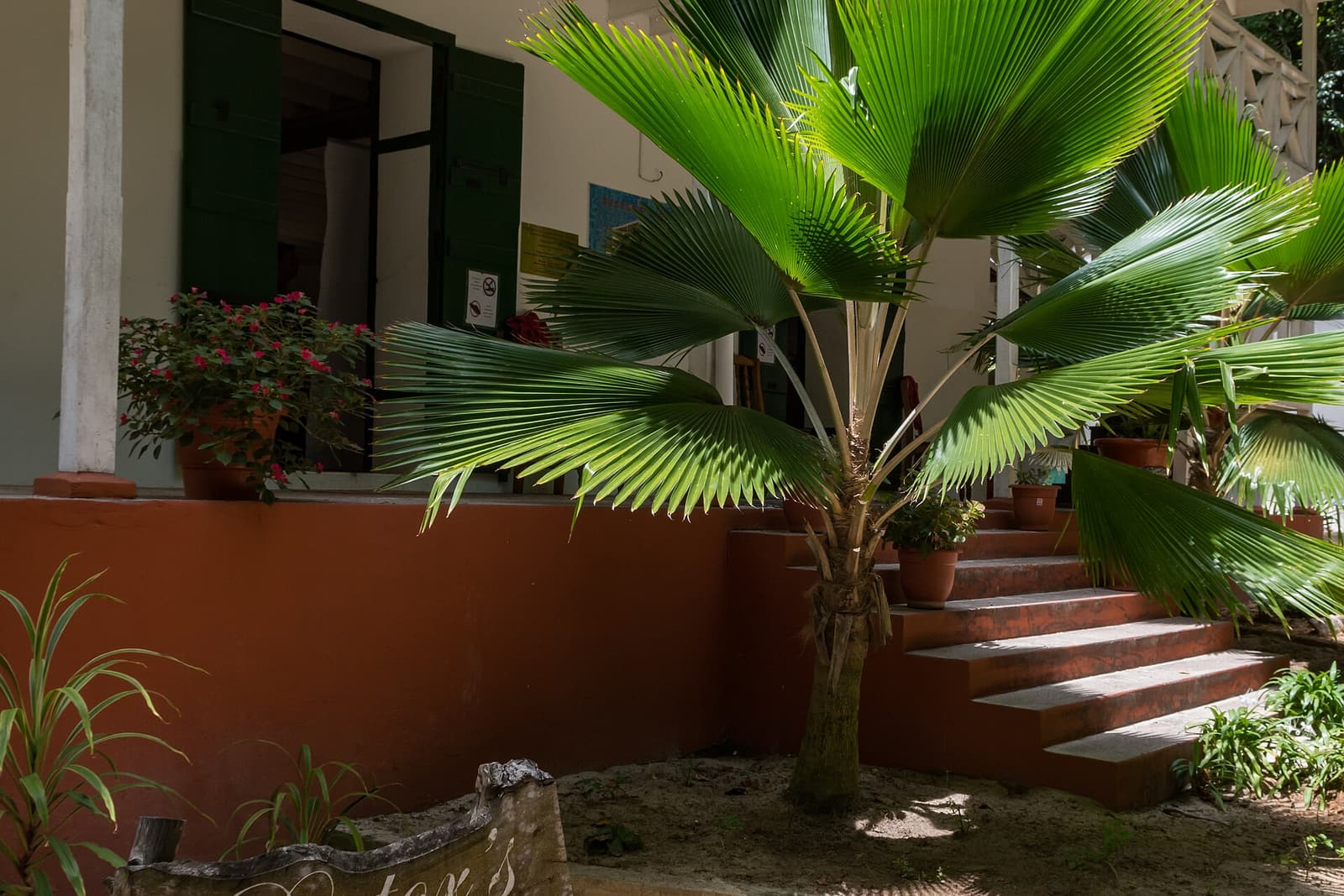
The veranda and steps of the restored Doctor’s House on Curieuse, framed by a fan palm Curieuse Island

The Doctor’s House & Anse José

The leper colony’s past, beside a perfect beach

For well over a century Curieuse was a place of exile: from 1829 to 1965 it served as a leper colony. The colonial residence of its doctor still stands above the beach at Anse José (Anse St Joseph) and now houses a small museum and visitor centre on the island’s history and nature, while the ruins of the old leprosarium lie nearby. The beach in front, with its granite boulders and calm water, is where most boat trips serve their barbecue lunch.

Islets & neighbouring islands

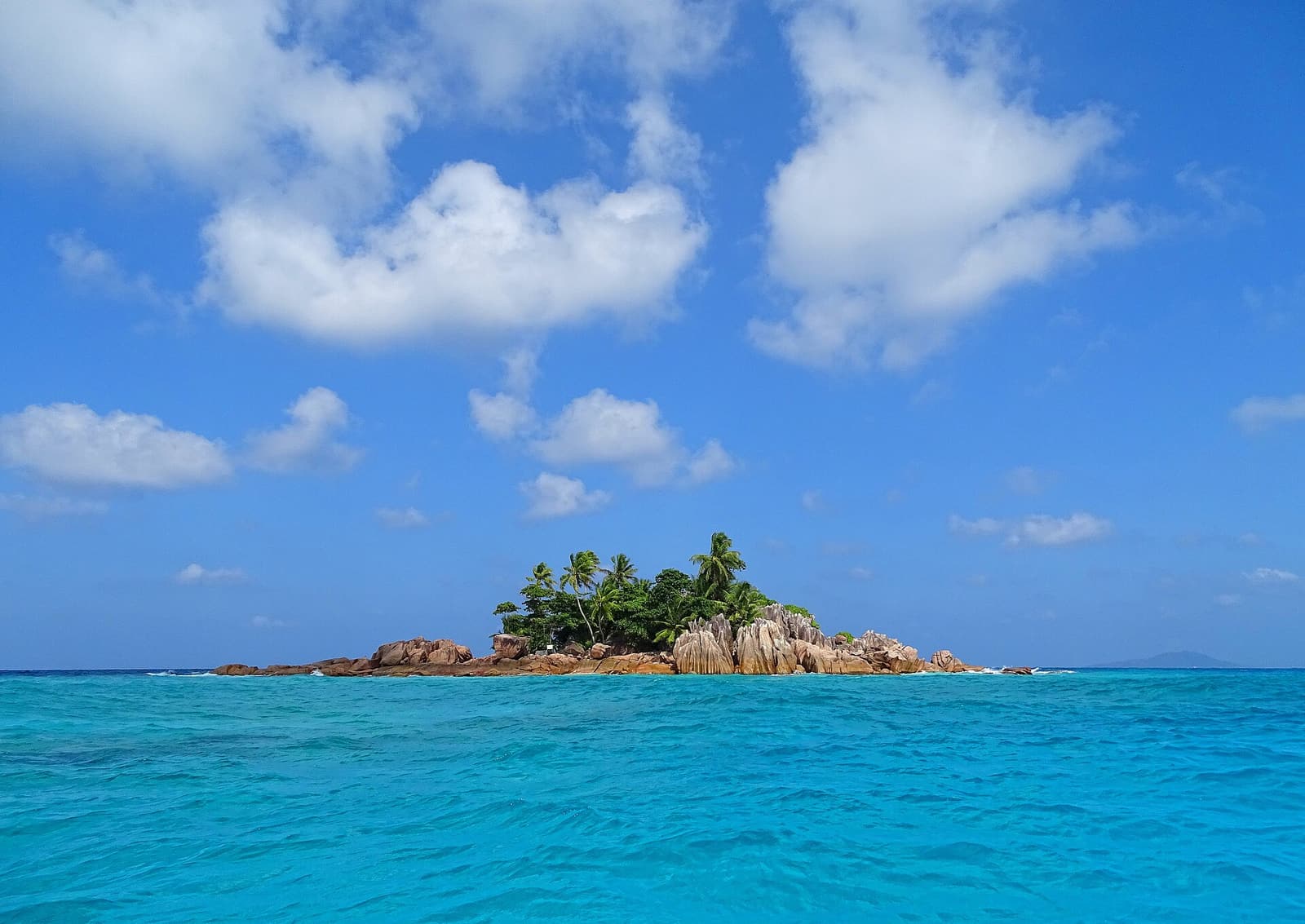
The tiny granite islet of St Pierre with a cluster of palm trees, surrounded by turquoise sea Islets & neighbouring islands

St Pierre Islet

The Seychelles in one picture — and a reef around it

A heap of sculpted granite crowned with a few coconut palms, rising from turquoise water between Curieuse and Praslin’s Côte d’Or: St Pierre is one of the most photographed views in the Seychelles. Almost every Curieuse boat trip stops here for snorkelling around the rocks, where parrotfish, surgeonfish, butterflyfish and the occasional turtle feed among the boulders and coral.

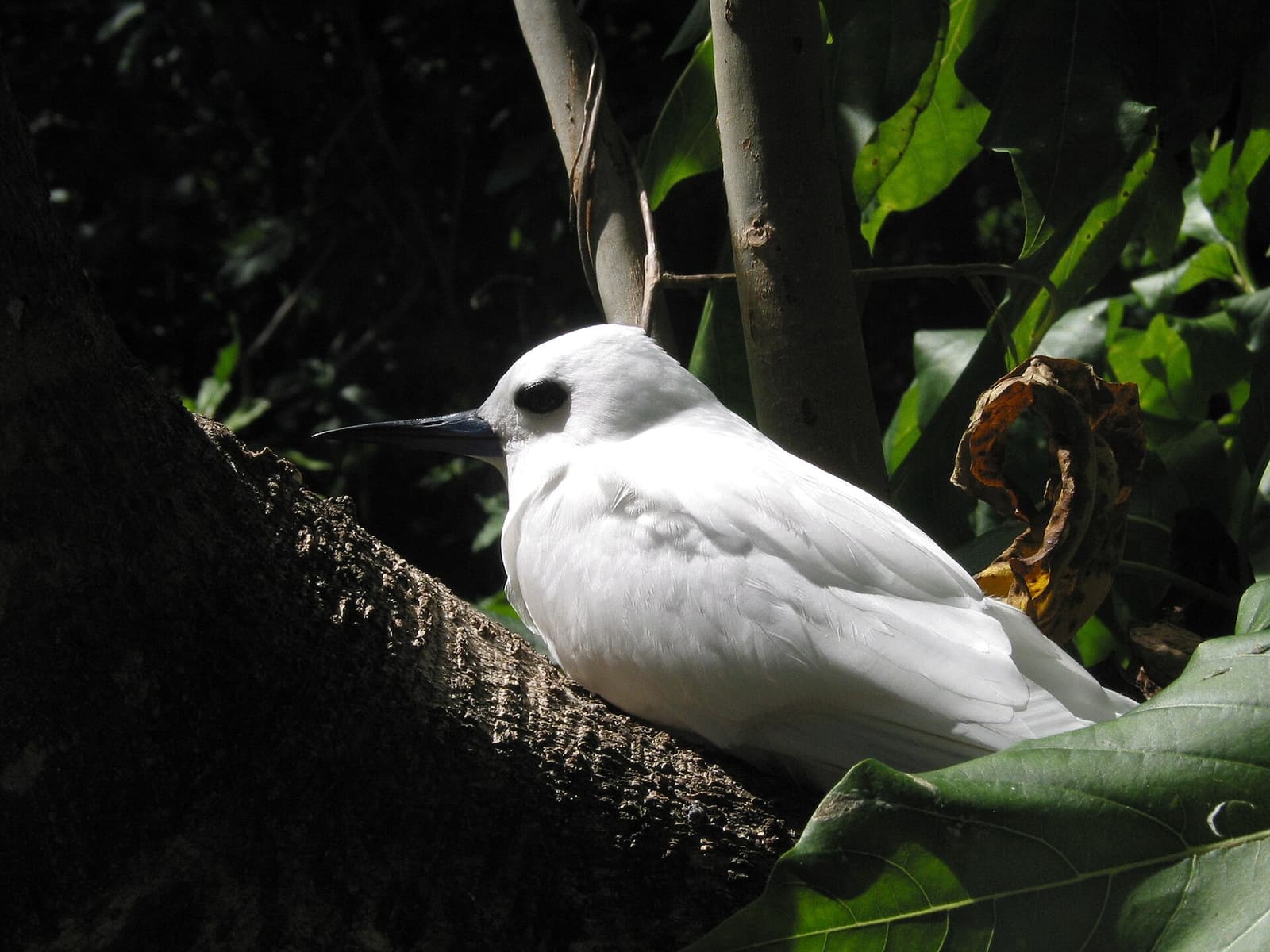
A white fairy tern perched on a branch on Cousin Island Islets & neighbouring islands

Cousin Island Special Reserve

A bird sanctuary that saved a species

Two kilometres west of Praslin, the 29-hectare island of Cousin was bought for conservation in 1968 to save the Seychelles warbler, then down to a few dozen birds. Today it is a Special Reserve run by Nature Seychelles, home to hundreds of thousands of nesting seabirds — fairy terns, noddies, tropicbirds, shearwaters — as well as endemic land birds, skinks, nesting hawksbill turtles and a few giant tortoises. Visits are guided by the reserve’s wardens and some boat trips combine it with Curieuse.

Praslin & La Digue

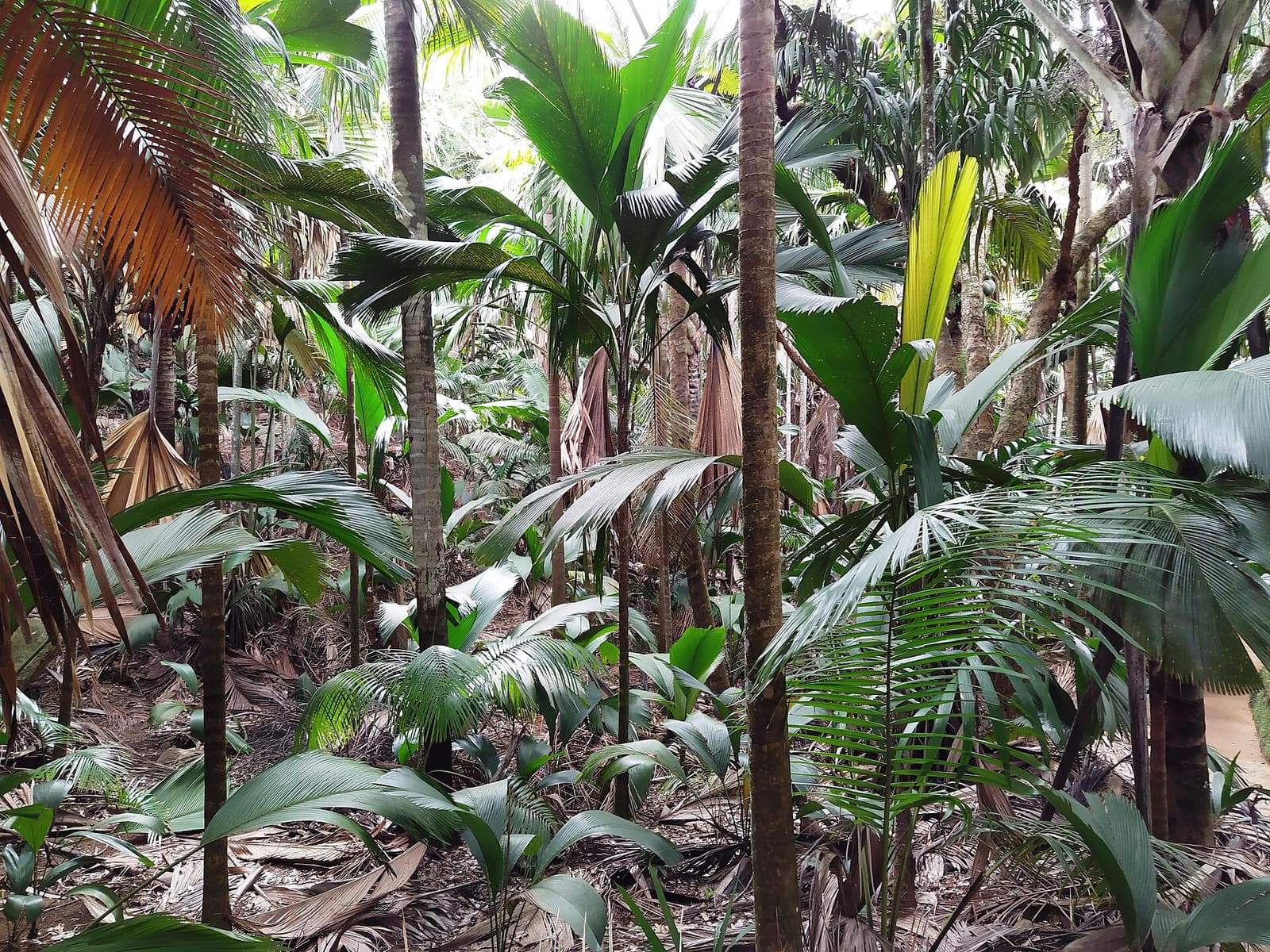
Dense palm forest with tall endemic palms and coco de mer in the Vallée de Mai, Praslin Praslin & La Digue

Vallée de Mai

The coco de mer forest — Curieuse’s twin

Curieuse is one of only two islands where the coco de mer grows wild; the other is Praslin, and the Vallée de Mai is where you see it at its most magnificent. This UNESCO World Heritage palm forest in the heart of Praslin — just 19.5 hectares — shelters thousands of the giant palms alongside the island’s other endemic palms, and is the stronghold of the rare Seychelles black parrot. Shady trails of one to three hours lead through it.

Turquoise water over granite rocks along the white sand of Anse Lazio, Praslin Praslin & La Digue

Anse Lazio

Praslin’s most celebrated beach

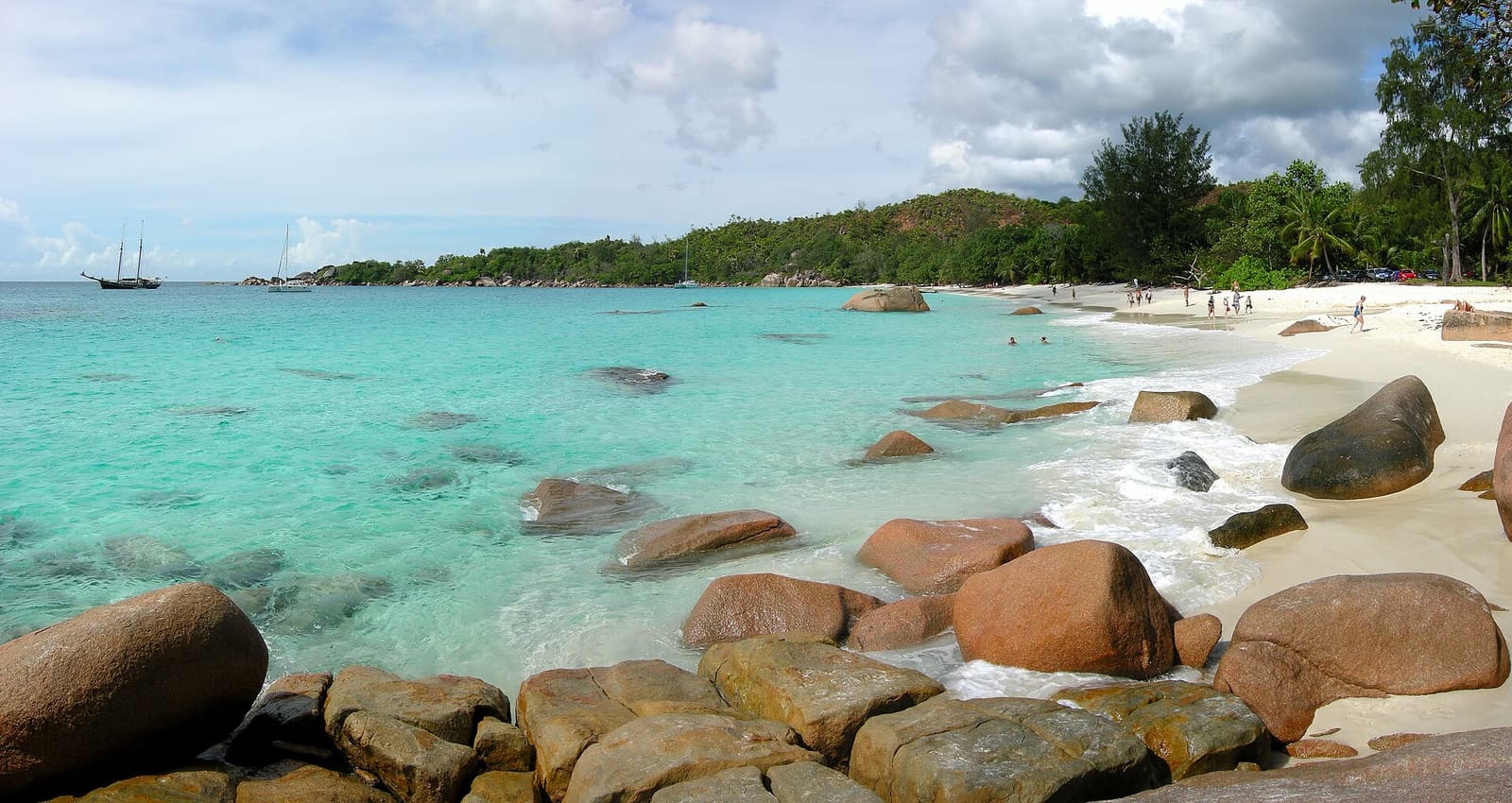
At the north-western tip of Praslin, a long curve of fine sand between granite boulders, backed by takamaka trees and washed by impossibly clear water, Anse Lazio regularly appears on lists of the world’s best beaches. Swimming is usually easy, there is good snorkelling around the rocks at either end, and a couple of restaurants sit behind the sand. It is the natural place to spend an afternoon after a morning on Curieuse.

Coconut palms leaning over the white sand and calm water of Côte d’Or beach at Anse Volbert, Praslin Praslin & La Digue

Côte d’Or & Anse Volbert

Praslin’s beach village, facing Curieuse

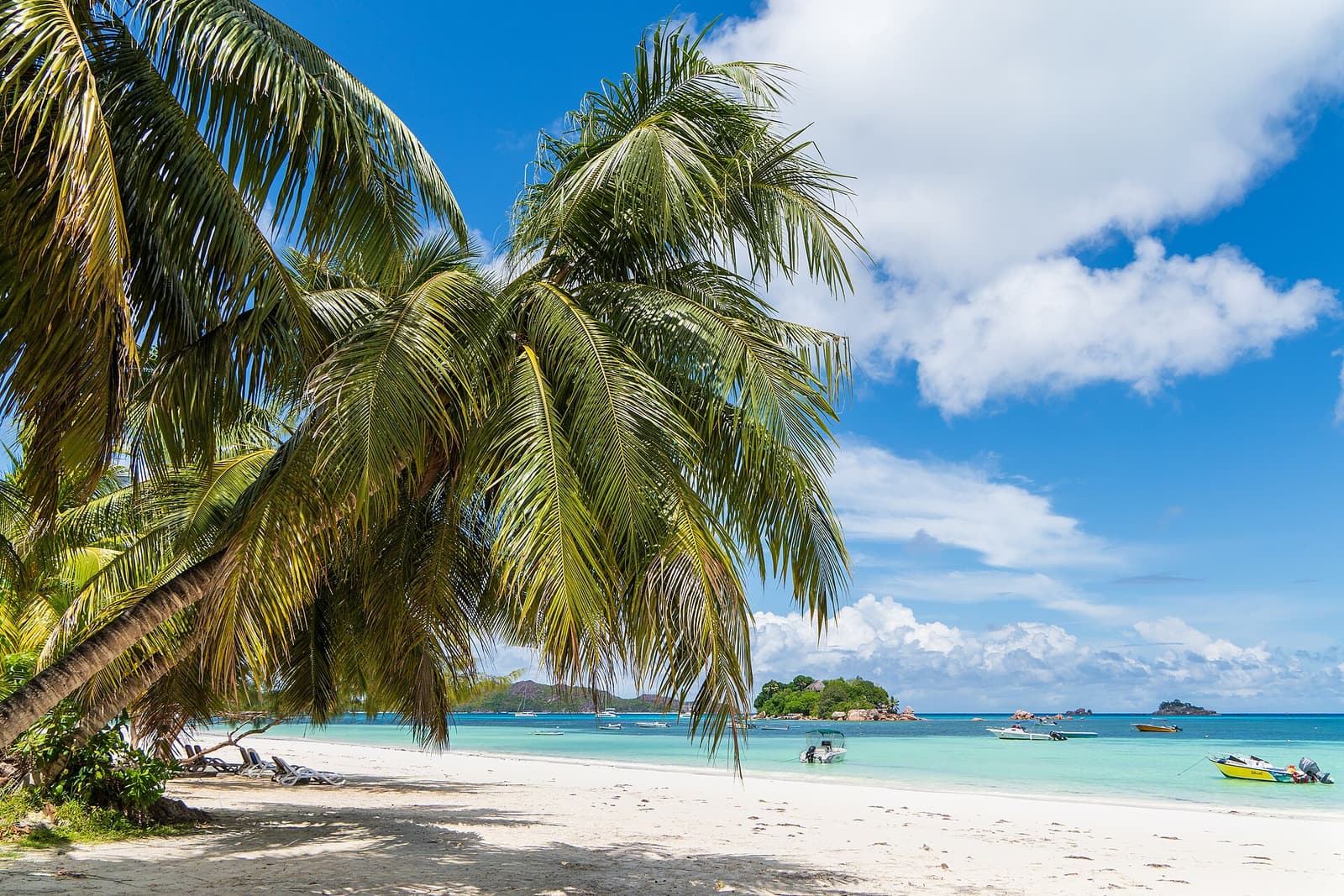
Côte d’Or — the long sandy bay of Anse Volbert on Praslin’s north-east coast — is the island’s liveliest stretch, with hotels, guesthouses, restaurants, small supermarkets and dive and boat operators along the beach road. Its shallow, generally calm water is good for children, and across the bay you look straight at St Pierre and Curieuse: many boat trips to Curieuse start here, which makes it the most convenient place to stay.

Smooth pink granite boulders beside turquoise water at Anse Source d’Argent on La Digue Praslin & La Digue

La Digue

Bicycles, boulders and Anse Source d’Argent

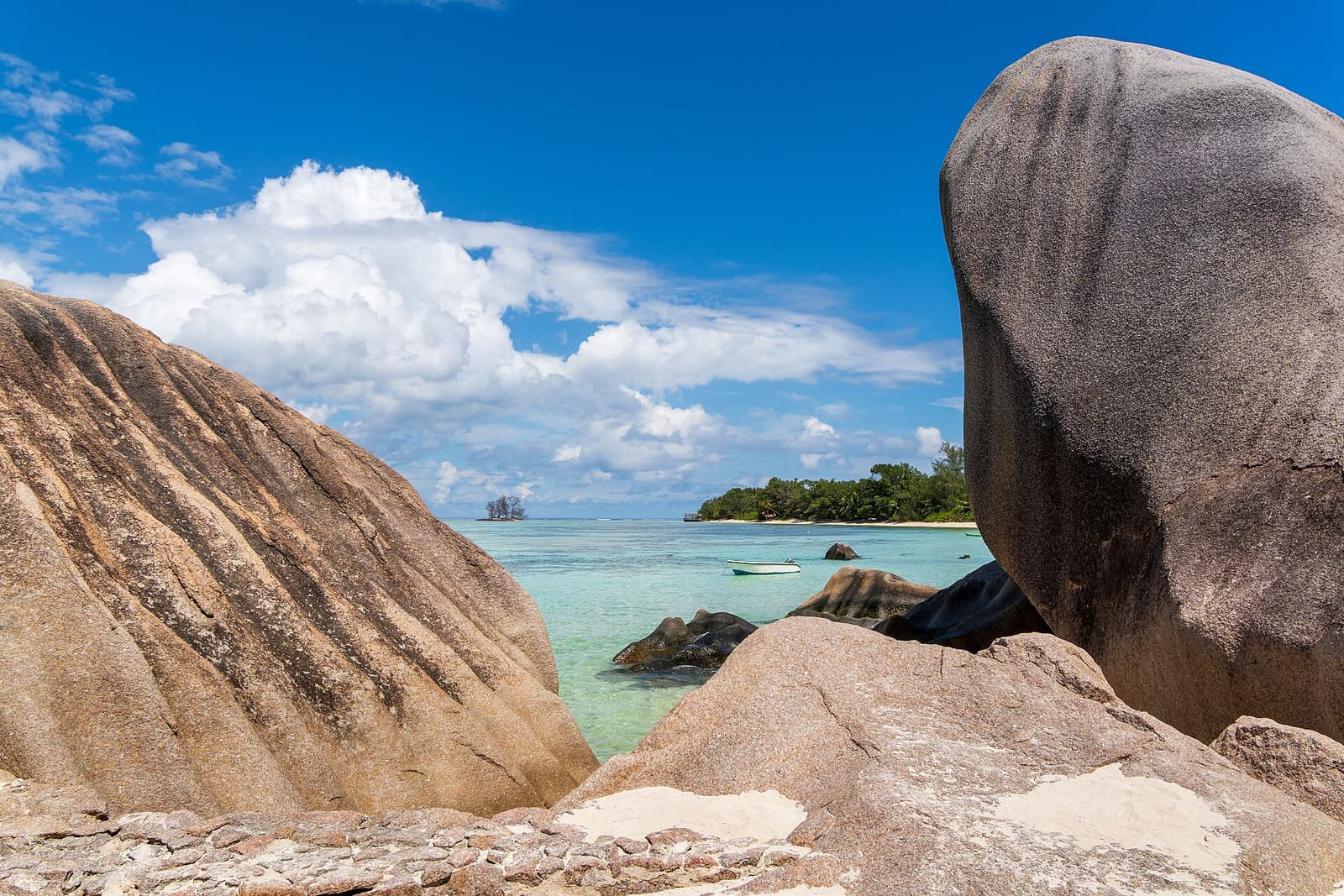
Fifteen minutes by ferry from Praslin, La Digue is the island where life still moves at the speed of a bicycle. Its famous beach, Anse Source d’Argent, with its pink granite boulders, lies inside L’Union Estate, an old coconut plantation with a copra mill and giant tortoises. Beyond are the wild beaches of the east coast — Grand Anse, Petite Anse and Anse Cocos — and the Veuve Reserve, home of the paradise flycatcher. Some catamaran trips to Curieuse depart from La Digue.

How to fit them together

  • One day on the water: St Pierre (snorkelling), Baie Laraie (tortoises), the mangrove trail and lunch at Anse José — the classic Curieuse boat trip.
  • A morning on Praslin: the Vallée de Mai, as early as possible.
  • An afternoon on the beach: Anse Lazio, or Côte d’Or for sunset behind St Pierre.
  • A day on La Digue: ferry, bicycle, L’Union Estate and Anse Source d’Argent.
  • A nature day: Cousin Island with Curieuse, on the days Cousin is open.

See our itineraries for how this works over three, five or seven days, and where to stay to keep the boat ride short.

Plan your Curieuse day

The best boats fill up. Reserve your day early.

The top-rated Curieuse trips run with limited places, and in high season and school holidays the best dates go first. Compare and reserve in a couple of taps — most trips can be cancelled free of charge up to 24 hours ahead.