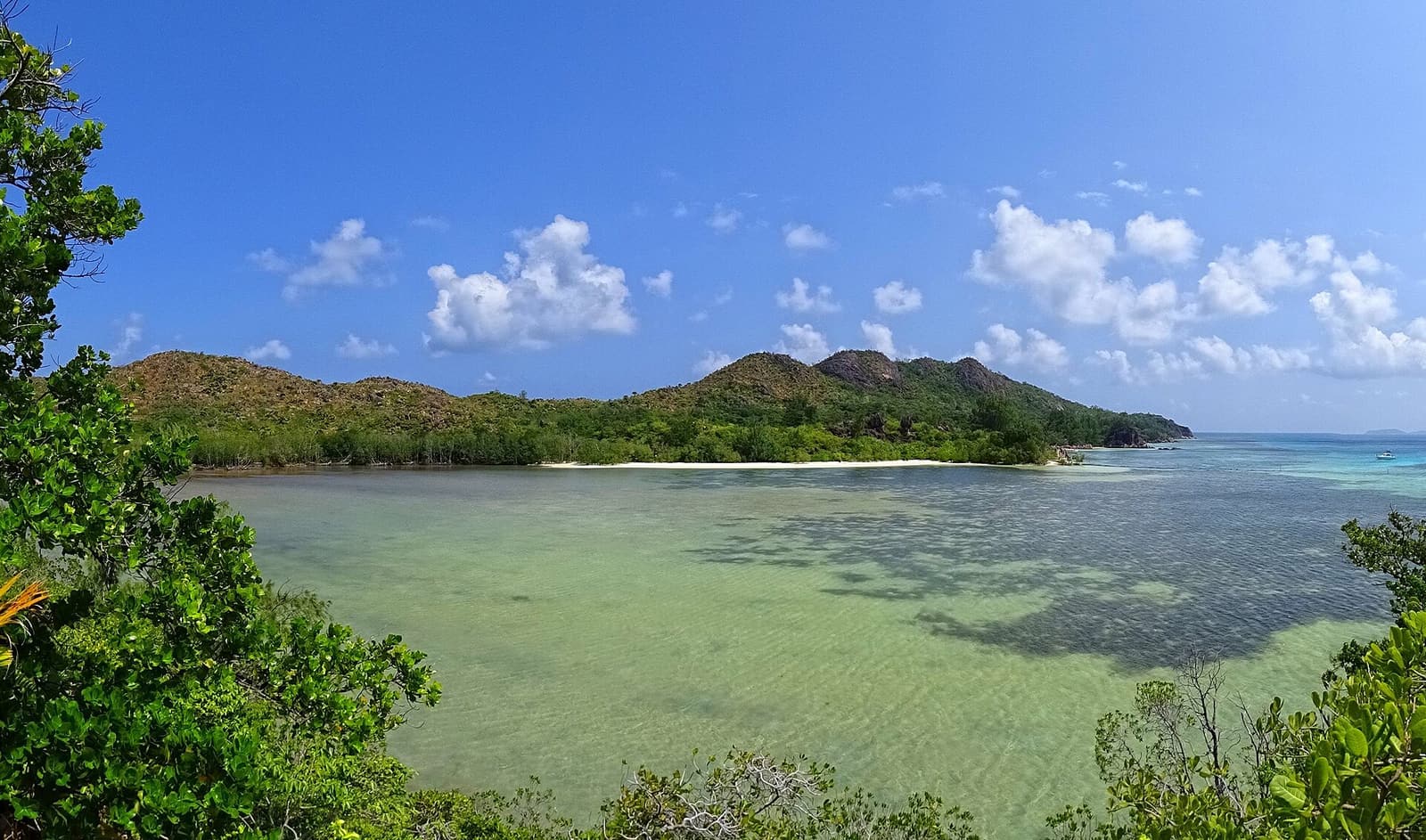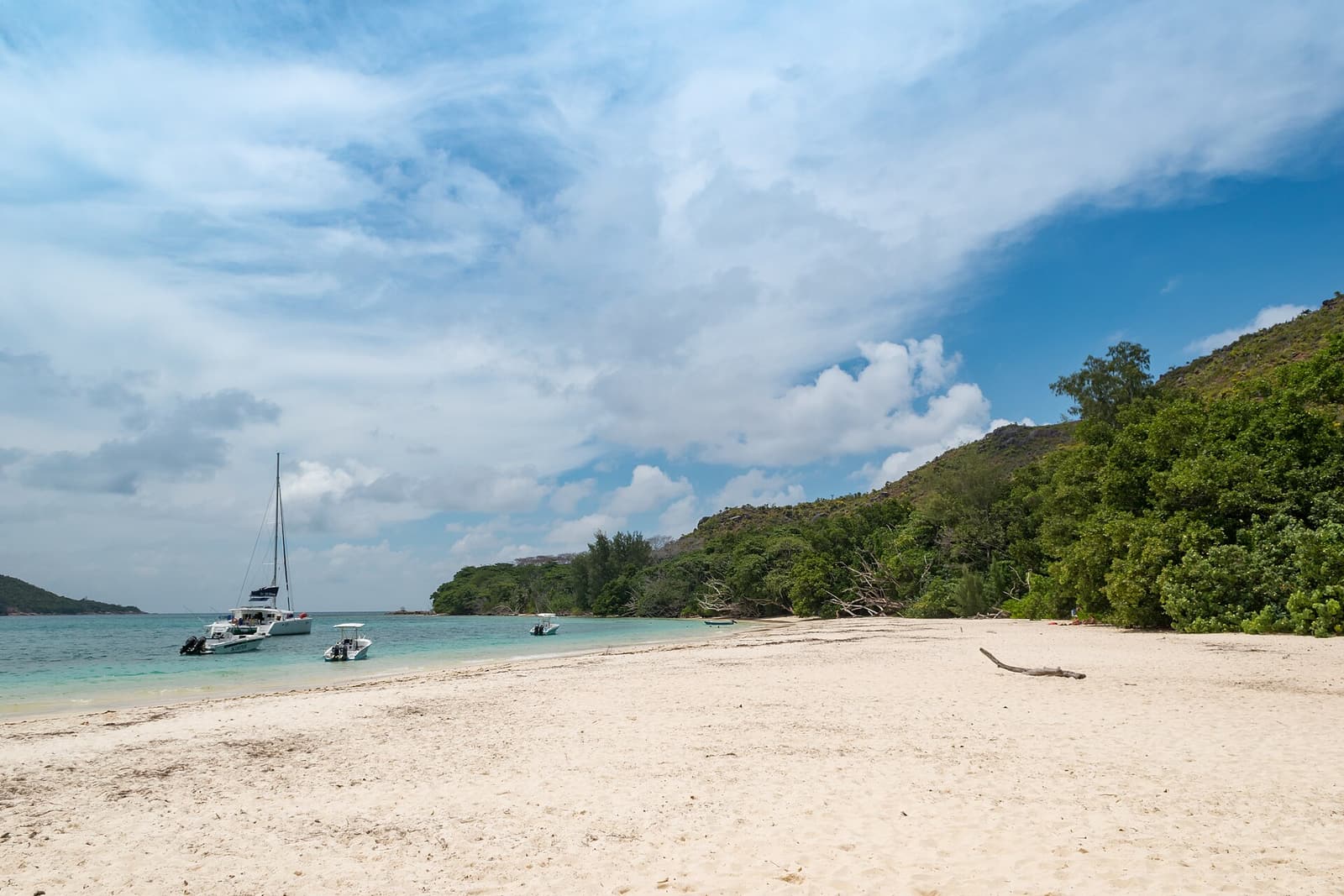
Curieuse is a granite island of about 2.9 km², just off the north coast of Praslin in the Seychelles. It has no village, no shops and no hotels — only a ranger station, a historic house, a few kilometres of trail, some of the loveliest beaches in the inner islands, and more than 300 giant tortoises.
A short history
The island’s first French name was Île Rouge, after its red soil. In 1768 an expedition led by Marc-Joseph Marion du Fresne claimed it for France and renamed it after one of the expedition’s ships, the schooner La Curieuse. As on other islands, its native giant tortoises were soon wiped out.
From 1829 to 1965 Curieuse was a leper colony. The isolation spared it from development, and the former Doctor’s House at Anse José is now a museum. In 1967 a fire destroyed much of the island’s vegetation, including more than 150 coco de mer palms. The government took the island in hand, and in 1979 Curieuse and the surrounding sea became the Curieuse Marine National Park. Between 1978 and 1982 Aldabra giant tortoises were brought here, and their descendants now number more than 300.
What you will see
- Giant tortoises around the ranger station at Baie Laraie, with a nursery of young ones.
- A boardwalk through the mangroves and a trail over the red hills to Anse José.
- Coco de mer palms growing wild — Curieuse and Praslin are their only natural home.
- The Doctor’s House museum and the ruins of the leper colony.
- Snorkelling at St Pierre, the palm-topped islet in the bay.
 Curieuse Island
Baie Laraie & the Giant Tortoises
Where the boats land — and the tortoises wander the lawn
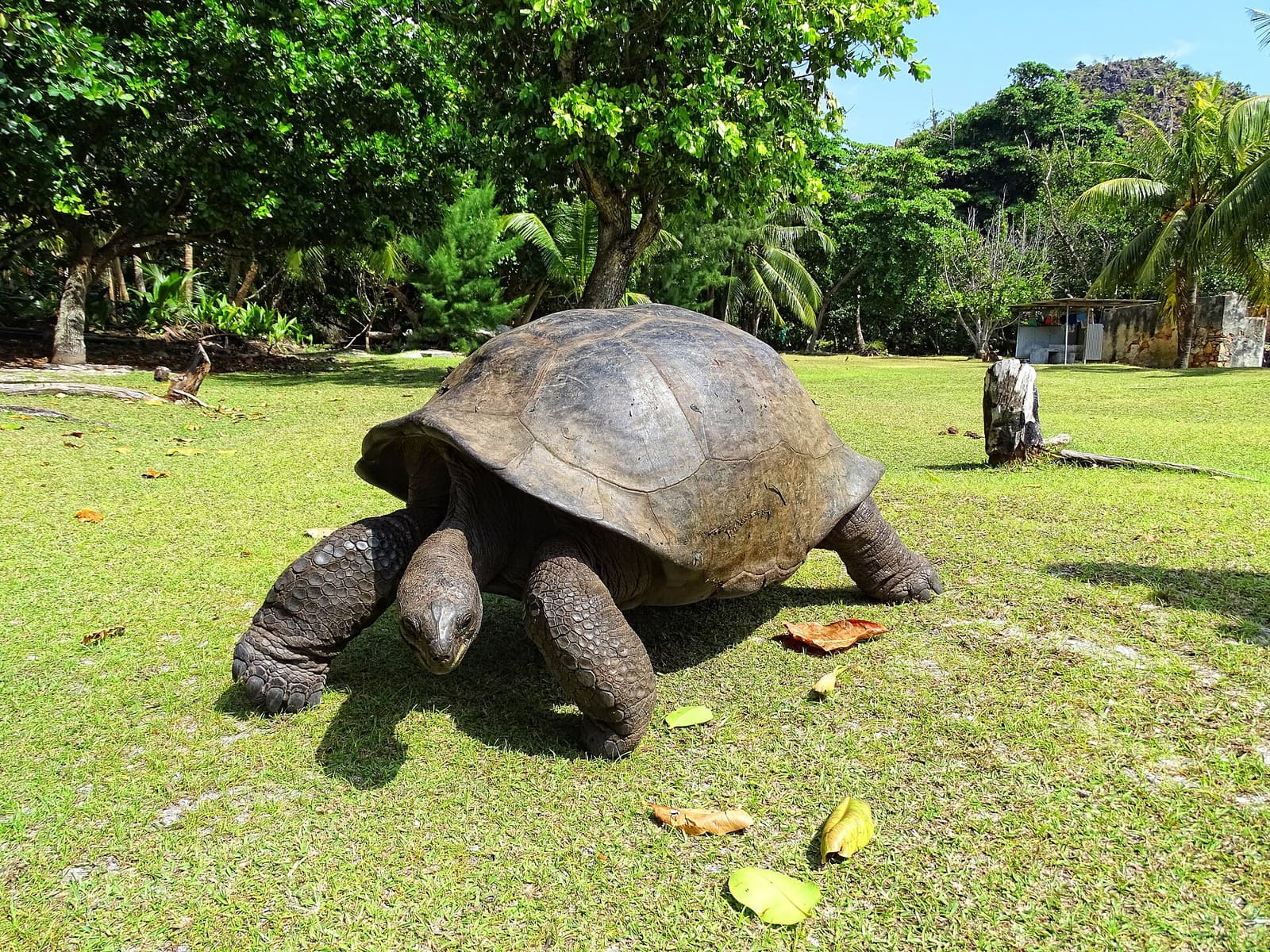
The wide bay on the south side of Curieuse, facing Praslin, is where almost every visit begins. Beside the beach stands the ranger station of the marine national park, and around it, grazing on the grass or dozing in the shade, are some of the island’s Aldabra giant tortoises. More than 300 live on Curieuse, descendants of animals brought from Aldabra between 1978 and 1982; the youngest are reared in pens by the station until they are big enough to fend for themselves.
 Curieuse Island
Mangrove Boardwalk & Trail to Anse José
A raised walkway through the mangroves, then over the red hills
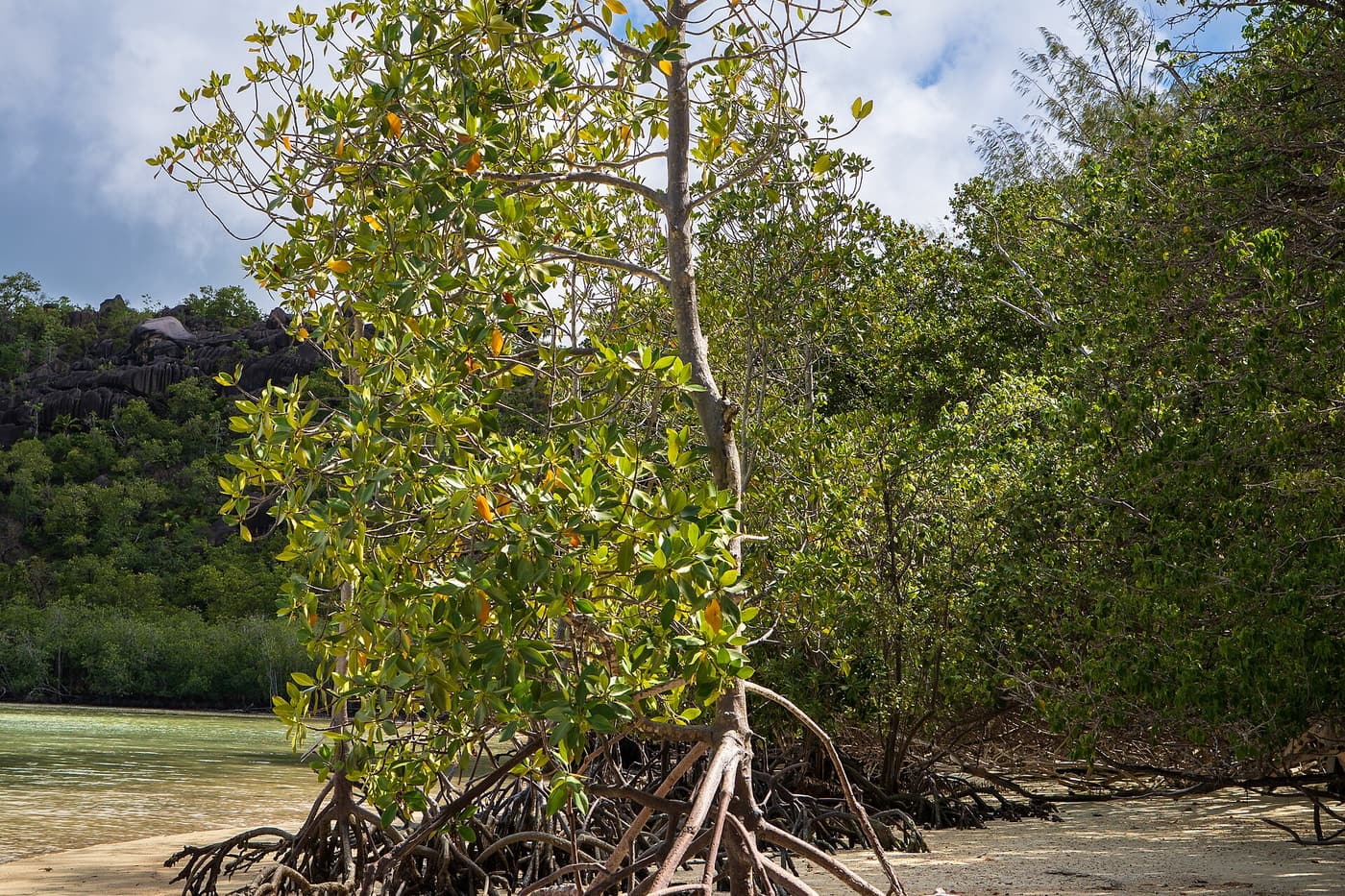
From the ranger station a trail sets off around the head of Baie Laraie, where a raised boardwalk carries you over one of the finest mangrove forests in the granitic Seychelles. Crabs scuttle among the stilt roots below; herons fish in the channels. The path then climbs gently over a saddle of red earth, past young coco de mer palms, and drops down to Anse José on the other side — usually a walk of well under an hour.
 Curieuse Island
The Doctor’s House & Anse José
The leper colony’s past, beside a perfect beach
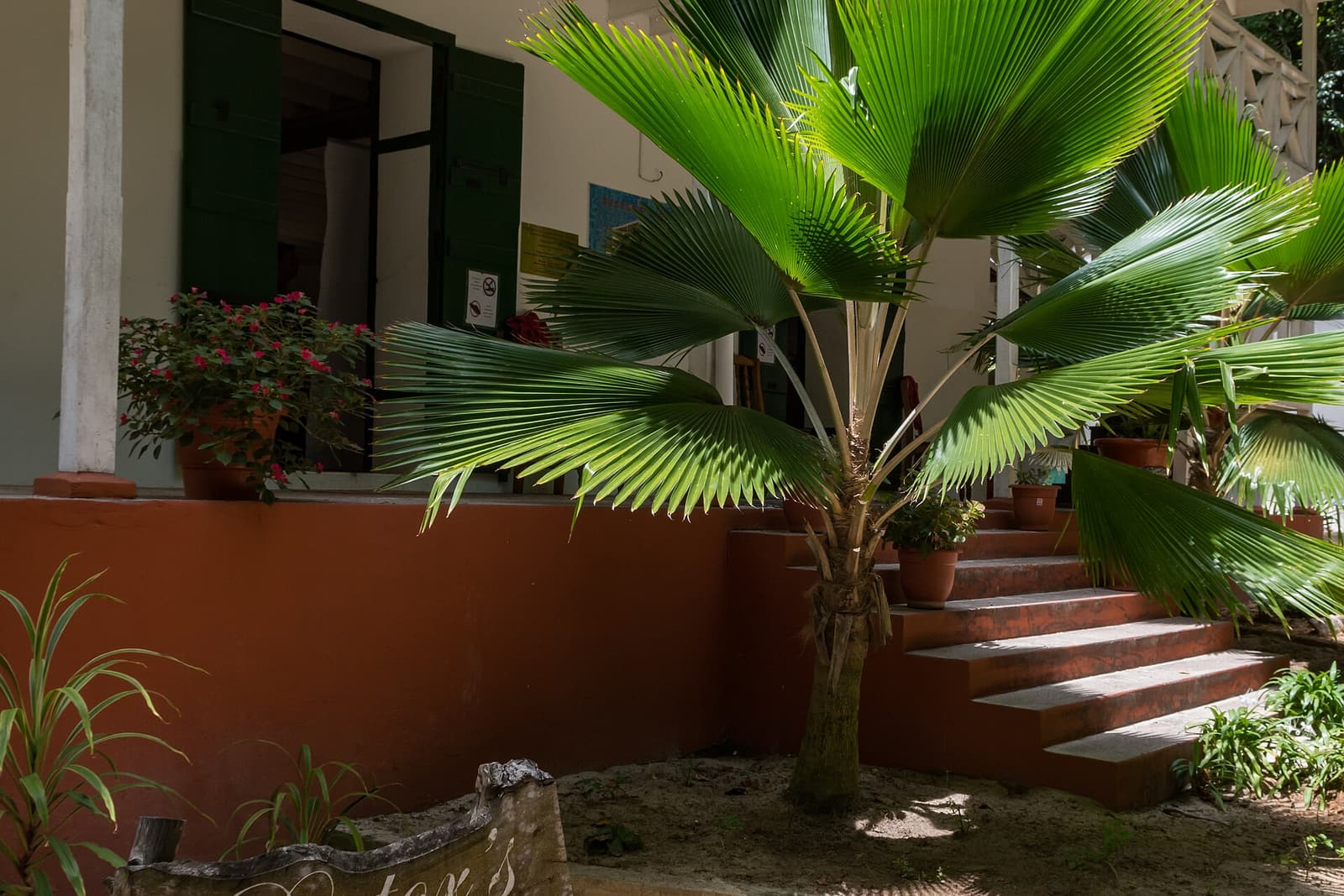
For well over a century Curieuse was a place of exile: from 1829 to 1965 it served as a leper colony. The colonial residence of its doctor still stands above the beach at Anse José (Anse St Joseph) and now houses a small museum and visitor centre on the island’s history and nature, while the ruins of the old leprosarium lie nearby. The beach in front, with its granite boulders and calm water, is where most boat trips serve their barbecue lunch.
 Islets & neighbouring islands
St Pierre Islet
The Seychelles in one picture — and a reef around it
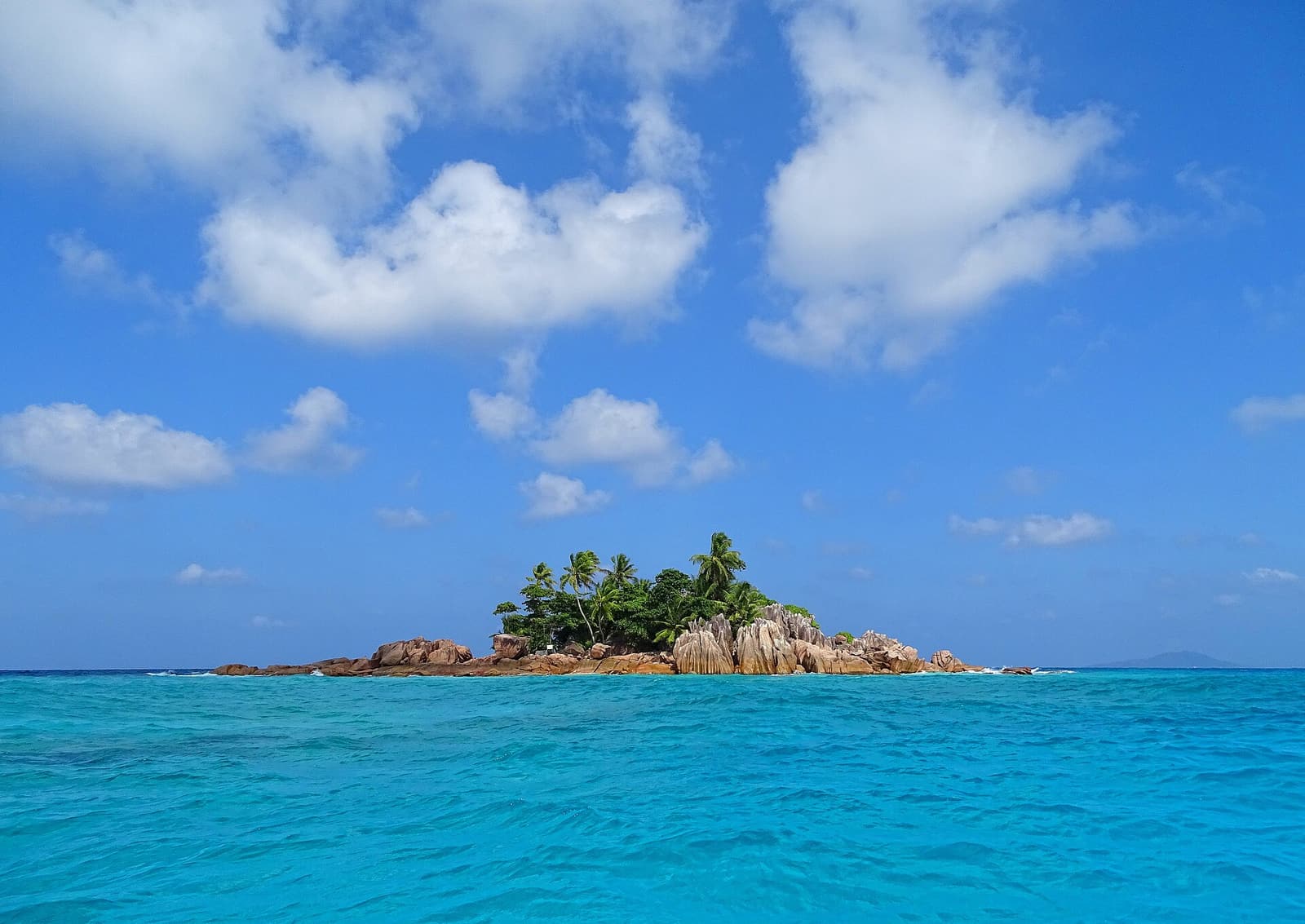
A heap of sculpted granite crowned with a few coconut palms, rising from turquoise water between Curieuse and Praslin’s Côte d’Or: St Pierre is one of the most photographed views in the Seychelles. Almost every Curieuse boat trip stops here for snorkelling around the rocks, where parrotfish, surgeonfish, butterflyfish and the occasional turtle feed among the boulders and coral.
The national park: fees and rules
Curieuse is managed by the Seychelles’ national parks authority. Every visitor pays a park entrance fee; on most organised trips it is included (check the listing), and independent visitors pay at the ranger station on arrival. Fees change, so check the current rate rather than relying on old figures.
- Do not feed the tortoises, sit on them or chase them, and keep children close.
- Take nothing away: shells, coral, seeds and above all coco de mer nuts are protected.
- Stay on the trails and the boardwalk; do not climb on the ruins.
- Do not stand on or touch coral when snorkelling, and do not feed the fish.
- Take all rubbish back with you. There are no bins in the wild parts of the island.
- No camping, fires or overnight stays: Curieuse is a day-visit island.
What to bring
- Swimwear, a towel and a rash vest or T-shirt for snorkelling.
- Reef-safe sunscreen, a hat and sunglasses — the equatorial sun is fierce.
- At least a litre of water per person, even if drinks are provided.
- Sandals with a strap or light shoes for the trail, and reef shoes for boat landings.
- Insect repellent for the mangroves.
- A dry bag for your phone and camera — you will wade ashore from the boat.
- Cash for tips or a cold drink, and your own mask if you have a good one.
Money
The currency is the Seychelles rupee (SCR). Tour operators, hotels and many restaurants also quote and accept euros, and larger businesses take cards. Boat trips booked online are paid in advance. Carry some small notes for taxis, buses, tips and drinks. ATMs are found in the main villages of Praslin and La Digue, but not, of course, on Curieuse.
Food and drink
There is nowhere to buy food or drink on Curieuse. Full-day trips include a Creole barbecue — typically grilled fish and chicken, rice, salads and fruit — and usually soft drinks or water. On trips without lunch, bring a picnic from Praslin and take your rubbish home.
Health and safety
- Sun and heat: the biggest risk. Cover up, drink often and take shade at midday.
- Sea: currents can be strong off headlands and islets. Snorkel with a buddy, use a float if you are not a strong swimmer and follow the crew’s instructions.
- Boats: landings are often in shallow water; wear reef shoes and keep valuables dry.
- Insects: mosquitoes in the mangroves; use repellent.
- Emergency number in the Seychelles: 999.
Language, power and connectivity
Seychellois Creole, English and French are all official languages, and you will have no trouble in English or French. Power sockets are the British three-pin type (G), at 240 volts. Mobile coverage is good on Praslin and patchy in places on Curieuse — download offline maps before you go.
Planning your visit
One day is enough to see Curieuse properly, but give yourself several days on Praslin so you can move your trip if the weather turns. Read our boat-trip guide, choose a base on Praslin, check the best time to visit, and see our itineraries.